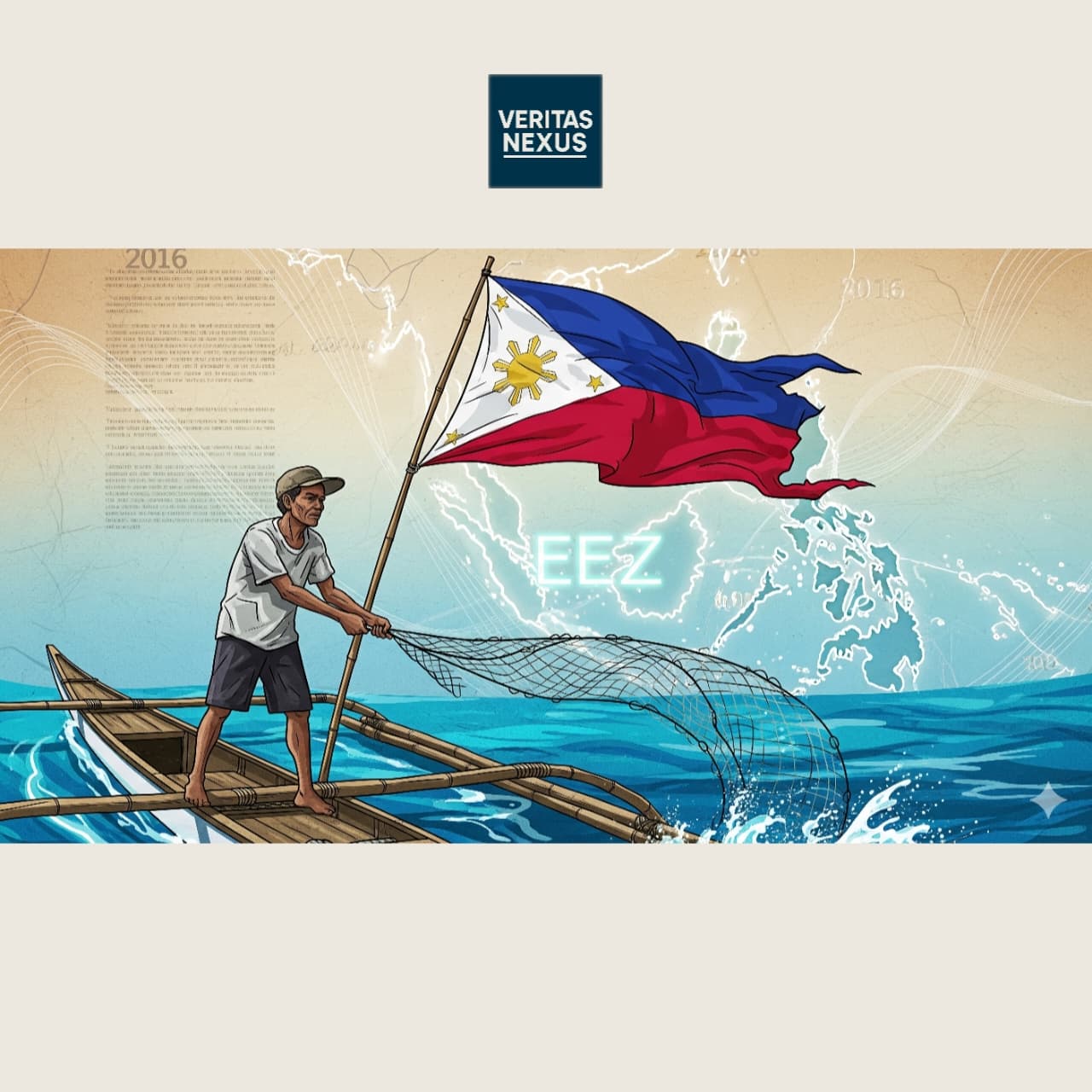
This question goes to the very heart of the dispute in the South China Sea. The short answer, based on international law, is that it is not merely a claim but a part of the Philippines’ sovereign entitlement. The nuance lies in understanding the critical difference between sovereignty and sovereign rights, and how these apply to the sea.
1. Defining the Legal Zones and Rights
Under the United Nations Convention on the Law of the Sea (UNCLOS), a country’s authority over its surrounding waters is defined by two key concepts:
- Sovereignty: This is the ultimate, absolute authority over a territory. A nation has full sovereignty over its land territory and its territorial sea, which extends 12 nautical miles from its coastline. Within this zone, the state has complete control over the waters, the seabed, and the airspace above.
- Sovereign Rights: This is a more limited legal authority. A state does not have full sovereignty over the area itself, but it does have the exclusive and legally-protected right to explore, exploit, conserve, and manage all the natural resources within it. These rights apply to a nation’s Exclusive Economic Zone (EEZ), which extends up to 200 nautical miles from its coast. In an EEZ, other nations still retain the freedom of navigation and overflight.
2. The West Philippine Sea: A Case of Sovereign Rights
The “West Philippine Sea” is the official name given by the Philippine government to the parts of the South China Sea that are within its legally recognized maritime zones. This area is predominantly within the Philippines’ EEZ.
Therefore, when the Philippines asserts that the West Philippine Sea is “ours,” it is a legally accurate statement referring to its sovereign rights to the resources within that area, not a claim of full sovereignty over the entire sea. The Philippines’ territorial sea (over which it has full sovereignty) is a small, inner part of this larger EEZ.
3. The Decisive Legal Proof: The 2016 Arbitral Ruling
The question of whether the West Philippine Sea is a legitimate part of the Philippines was settled definitively by the 2016 Permanent Court of Arbitration ruling. The tribunal, formed under UNCLOS, issued a unanimous and legally binding decision that provided a clear legal basis for the Philippines’ position:
- China’s “nine-dash line” has no legal basis: The ruling found that China’s claims to historical rights over the resources within its “nine-dash line” were contrary to UNCLOS and therefore had no lawful effect.
- Philippine EEZ Rights Affirmed: The tribunal explicitly affirmed that the Philippines has sovereign rights over its EEZ in the West Philippine Sea and that China had violated these rights by interfering with Filipino fishing and oil exploration.
- No EEZ from Reefs: The ruling also clarified that certain features claimed by China, such as Mischief Reef and Subi Reef, are legally “low-tide elevations” or “rocks” that cannot generate their own 200-nautical-mile EEZs. This meant that they were within the Philippines’ EEZ and not China’s.
In conclusion, the West Philippine Sea is not merely a claim. It is a legally-defined maritime zone where the Philippines holds sovereign rights to the natural resources. The 2016 arbitral ruling, which is a cornerstone of international law, confirms that these rights are not debatable but are a legitimate part of the Philippines’ national patrimony.